A good reflection prompt does one thing well: it narrows your attention to a single, answerable moment. “How was your day?” is too broad, and most people answer it with a shrug. “What was the most energising ten minutes of your day?” is specific enough to recall something real. That specificity is the difference between a journal entry that teaches you something and one that just fills a page. The broad question asks you to summarise a whole day in one word, and most days do not fit in one word. They contain a slow morning, a sharp conversation, a quiet walk, and a tired evening, all at once. A specific prompt lets you pick one thread and follow it, and following one thread properly is more revealing than skimming the whole day in general terms.
That narrowing effect is why prompts work best when they ask about a moment, a change, a detail, or a choice, rather than about a whole day or a whole life. “What did you notice on the way home?” will produce a concrete answer, even on a day when you feel you have nothing to say. “What was the first thing that made you slow down today?” will produce an answer even on a busy day, because slowing down is a small, recognisable event. The prompt does not need to be clever. It needs to be answerable in two or three sentences, without requiring you to decide whether the day was good or bad first. Once you have answered a specific prompt honestly, you often discover that you do have something to say about the day as a whole — but you discovered it through the detail, not by starting with the summary.
 A good prompt narrows attention the way a sunrise narrows the eye to one bright point: one moment, clearly seen, is more useful than a whole day summarised vaguely.
Why vague prompts fail, even with good intentions
Vague prompts fail for a simple reason: they ask for a judgement before they ask for a memory. “How was your day?” forces you to choose a label — good, bad, busy, fine — and then to defend that label with a few examples. The label often comes from the last hour, the strongest feeling, or the mood you happen to be in while writing, rather than from the day itself. A day that ended tiredly can be labelled bad even if the morning was calm and useful. A day that ended pleasantly can be labelled good even if most of it felt flat. The journal entry then records the label, not the day, and when you review it later you learn very little, because the label has already hidden the details that might have explained it.
Vague prompts also invite repetition. If you answer “How was your day?” with “Busy, but okay” for ten days in a row, the journal becomes a list of identical entries, and the habit feels pointless. That is not a failure of discipline; it is a failure of the prompt. A prompt that produces the same answer every day is not asking a useful question. It is asking a question so broad that any answer fits, and therefore no answer teaches you anything. Specific prompts break that loop by changing the detail you are asked to notice. One day you notice energy, the next day you notice a conversation, the next day you notice a change in the afternoon. The journal stays interesting because the attention stays fresh, even when the days themselves look similar from the outside.
There is a second, subtler problem with vague prompts: they often smuggle in a demand for a positive story. “What are you grateful for?” can be a useful prompt, and gratitude itself is not the problem. The problem is when gratitude is the only prompt, every day, regardless of what actually happened. On a difficult day, a gratitude-only prompt can feel like an instruction to skip the difficult part and find something bright to report instead. The journal then becomes a highlight reel, not a record, and the difficult feelings do not disappear; they simply go unrecorded, which makes them harder to notice and understand later. A balanced set of prompts makes room for both light and heavy material, without forcing either one.
The best prompts also avoid forcing a positive spin. A prompt like “What are you grateful for?” can be useful, but if it is the only prompt you ever use, it can push you to skip difficult feelings. Balance it with prompts that allow honesty: “What felt heavy today, and what made it a little lighter?” or “What do you wish you had said today?” A journal that only records good days is not a record at all. Notice the structure of those honest prompts: they do not ask you to wallow, and they do not ask you to fix anything. They ask for a detail — what felt heavy, what made it lighter, what was left unsaid — and they leave room for a small, practical observation. That balance is the difference between reflection and rumination. Reflection notices a detail and learns from it. Rumination circles the same judgement without new information. Specific, balanced prompts keep you on the reflection side of that line.
Five prompt styles that actually work
You do not need dozens of prompts. Five styles, used in rotation, will cover most days, and each style teaches a different kind of noticing. Learn the styles, and you can generate your own prompts for any situation, rather than collecting lists you never use.
1. The moment prompt
A moment prompt asks about a single, time-limited event. Examples include: “What was the most energising ten minutes of your day?” “What was the quietest moment today, and where were you?” “What did you notice, for the first time, on a familiar route today?” The strength of this style is recall. A moment is easier to remember than a day, and it usually comes with sensory details — a sound, a place, a person, a temperature — that make the entry feel real when you reread it. To write a good moment prompt, include a time limit or a place: ten minutes, the walk home, the first hour, the last conversation. Without that anchor, the prompt drifts back towards vagueness. If you want a ready-made starting point, the daily journal prompts tool on this site offers focused prompts by theme, which you can use as written or adapt to your own day by adding a time or place.
2. The contrast prompt
Another useful style is the contrast prompt. Ask yourself what changed during the day, rather than how the day was overall. “When did your energy shift, and what happened just before?” often reveals patterns that a single mood rating hides. You might notice that a short walk, a particular conversation, or a late meal consistently changes the afternoon, and that knowledge is practical. Contrast prompts work because days are rarely uniform. Energy, attention, and mood rise and fall, and the turning points are usually more informative than the average. Other contrast prompts include: “What was different about this morning compared with yesterday morning?” “When did today start to feel easier, and what changed?” “What felt heavy in the morning and lighter by evening, or the other way round?” When you answer a contrast prompt, name both sides of the change and the moment in between. That middle moment — the walk, the message, the meal, the rest — is often the practical detail you can repeat, avoid, or plan for tomorrow, without needing a grand plan for your life.
3. The detail prompt
A detail prompt asks about one concrete thing, rather than about a feeling in general. “What did you eat for lunch, and did it help or hinder the afternoon?” sounds trivial, but it is often more useful than “How did you feel today?” because it connects a feeling to a specific, changeable detail. Other detail prompts include: “What was the first sound you heard this morning?” “What object did you use most today, and what does that say about where your time went?” “What sentence do you remember most clearly from today, and who said it?” Detail prompts are especially helpful on days when you feel blank, because they do not require you to have an insight before you start writing. You start with a fact, and the insight often follows. If you keep a written mood journal, detail prompts pair well with a simple mood and energy note: the detail explains the rating, and the rating gives the detail a context you can compare across days.
4. The honest prompt
An honest prompt makes room for feelings that a purely positive prompt would skip, without turning the journal into a complaint list. Examples include: “What felt heavy today, and what made it a little lighter?” “What do you wish you had said today, and to whom?” “What are you avoiding thinking about, in one sentence?” “What did you pretend was fine today, when it was not quite fine?” The key is the second half of each prompt. A prompt that only asks what felt heavy can leave you stuck in the heavy part. A prompt that also asks what made it lighter, what you wish you had said, or what one sentence captures the avoided thought, gives the entry a direction without forcing a happy ending. Use honest prompts sparingly at first — one or two a week is enough — and notice whether they make the journal feel more truthful or simply heavier. If they feel heavier, balance them with a moment prompt or a forward-looking prompt on the same day, so the entry ends with a small, next-day detail rather than with the heavy feeling alone.
5. The forward-looking prompt
End each reflection with a small, forward-looking question, not a grand resolution. “What is one small thing I want tomorrow to include?” is sustainable in a way that “How will I fix my life?” is not. Reflection works best when it stays close to the next day, not the next year. Forward-looking prompts work because they turn noticing into a tiny, testable plan. Other examples include: “What one thing, if I repeat it tomorrow, would make tomorrow a little easier?” “What do I want to notice tomorrow that I missed today?” “What is the smallest next step for the task I have been putting off?” Keep the answer to one thing, and keep that thing small enough to do in under fifteen minutes. A forward-looking prompt that produces a huge, vague plan — exercise more, be more organised, work harder — is just a vague prompt in disguise. A forward-looking prompt that produces a concrete detail — walk after lunch, text that friend, start the report with the first paragraph only — is a prompt that will actually change tomorrow, and tomorrow’s journal can then record whether it did.
How to build your own prompts, from your own life
If you want to build your own prompts, start from your own life. Think of a recurring situation — mornings, work, family, rest — and write a prompt that asks about one concrete detail of it. Keep the prompt to one sentence, and test it for a week. If it keeps producing the same shallow answer, make it more specific. If it produces something surprising, keep it. That test-and-adjust cycle is more valuable than any list of ready-made prompts, because it teaches you what kind of question actually makes you notice something in your own circumstances. A prompt that works for someone else may not work for you, not because it is bad, but because your days, your routines, and your blind spots are different.
Start with a simple template, and fill in the blanks from your life. “What was the [most/least] [energising/calm/useful] [ten minutes/hour/part] of [today/this morning/this afternoon], and what happened just before it?” Replace the brackets with your own choices, and you have a prompt that is both specific and personal. For mornings, try: “What was the first decision I made today, and did it make the morning easier or harder?” For work, try: “What was the single task that took most of my attention today, and was that attention well spent?” For rest, try: “When did I actually rest today, as opposed to merely stopping work, and what was different about that time?” For family or social life, try: “What did I learn about someone close to me today, from something small they said or did?” Each of these prompts asks about a detail you can actually recall, and each one leaves room for an honest answer, whether the detail turns out to be pleasant, awkward, or simply ordinary.
Test a new prompt for a full week before judging it. A prompt that feels awkward on day one may become useful by day four, once you know what kind of detail to look for. A prompt that feels easy on day one may become shallow by day five, once you have exhausted the obvious answers. Keep a short list of prompts that survived the week test, and retire prompts that consistently produce one-word answers or identical entries. Over a month, you will build a personal prompt bank of perhaps ten to fifteen prompts, organised by situation — mornings, energy, conversations, rest, and tomorrow — that you can rotate without thinking. That bank is worth more than a hundred prompts copied from the internet, because every prompt in it has already proven that it makes you notice something in your own life.
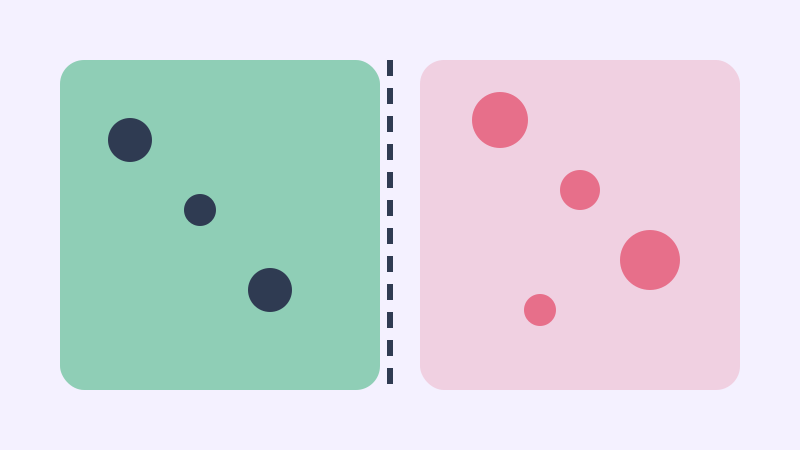 Contrast prompts work by comparing two sides of a day. Name both sides and the moment in between, and the turning point often becomes the most practical detail.
Copy-ready prompt sets you can use this week
The sets below are designed to be copied as written, used for a week, and then adapted. Each set contains five prompts, one for each weekday, and each prompt is one sentence. Do not try to answer all five prompts every day. Answer one prompt per day, and let the other four wait for their turn. That rotation keeps the journal fresh, and it prevents reflection from becoming a long homework assignment that you will avoid on tired evenings.
Set A: Noticing energy and attention. Monday: “What was the most energising ten minutes of today, and what happened just before it?” Tuesday: “When did my energy shift today, and in which direction?” Wednesday: “What task took most of my attention today, and was it the task I intended to prioritise?” Thursday: “What did I do today that felt restorative, as opposed to merely distracting?” Friday: “What one small thing do I want tomorrow to include, to protect my energy?” This set is useful when days feel busy but unproductive, because it separates busyness from energy, and attention from intention, in a way that a single mood rating cannot.
Set B: Noticing people and conversations. Monday: “What sentence do I remember most clearly from today, and who said it?” Tuesday: “What do I wish I had said today, and to whom?” Wednesday: “When did a conversation change how I felt today, and what was said just before the change?” Thursday: “What did I learn, from a small detail, about someone close to me today?” Friday: “What one kind thing, however small, did I do or receive today?” This set is useful when social days feel blurry, because it anchors reflection in specific words and moments rather than in general judgements about whether people were nice or difficult.
Set C: Noticing rest, routine, and tomorrow. Monday: “What was the quietest moment today, and where was I?” Tuesday: “What part of my routine actually helped today, and what part merely filled time?” Wednesday: “What felt heavy today, and what made it a little lighter?” Thursday: “What did I notice today that I usually walk past without seeing?” Friday: “What is the smallest next step for the task I have been putting off, that I could do tomorrow in under fifteen minutes?” This set balances honesty with forward motion, and it is a good default set for weeks when you do not know which theme to choose. If you want more prompts in this style, the daily journal prompts tool can provide a fresh question by theme, and you can copy any prompt that resonates into your written journal.
A daily routine: five minutes, one prompt, one forward step
Reflection does not need a long session to be useful. A five-minute routine, done at roughly the same time each day, will teach you more than a thirty-minute session done once a month. The routine below is designed to fit into an evening, a commute, or a quiet moment before bed, and it can be shortened to two minutes on busy days without losing its structure.
First, choose your prompt before you start writing. Do not stare at a blank page and wonder what to write about. Pick one prompt from your rotation, from a set above, or from the daily journal prompts tool, and write it at the top of the entry. Choosing the prompt first removes the hardest decision, and it gives the next few minutes a clear direction. Second, answer the prompt in two or three sentences, using concrete details: a time, a place, a person, a sentence, or an object. Do not try to write a beautiful paragraph. Write the detail, then one sentence about what the detail suggests, and stop. Third, add a mood and energy note if you keep one in your mood journal — a simple word for mood and a number or word for energy is enough — and notice whether the written detail explains the rating, or whether the rating and the detail seem to disagree. Disagreements are interesting; they often mean the rating captured the last hour, while the detail captured the whole day, or vice versa.
Fourth, end with one forward-looking sentence, using the template from the earlier section: one small thing for tomorrow, small enough to do in under fifteen minutes. Write it as a concrete action, not as a resolution. “Walk after lunch” is a forward step. “Be healthier” is not. “Text Maya back” is a forward step. “Be a better friend” is not. The difference matters, because tomorrow’s journal can check whether a concrete action happened, while a vague resolution can neither be checked nor learned from. Fifth, close the journal and stop. Do not reread the entry, edit it for style, or add a second prompt because the first one felt too short. A short, finished entry is a successful entry, and a habit of finishing short entries is what will still be alive in three months, when a habit of long, perfect entries would have collapsed under its own weight.
On busy days, shrink the routine, do not skip it entirely. A two-minute version is: one prompt, one sentence answering it, and one forward detail for tomorrow. That is three lines, and it keeps the chain of noticing alive. On days with more time, you can expand the same routine by answering a second prompt, or by adding a visual element: a colour, a shape, or a small sketch that stands for the day. If visual journaling appeals to you, the guide on art journaling for beginners shows how a colour-block page and a single sentence can work together, and the mood art generator can provide a quick colour warm-up before you write. The point of expanding on good days is not to make up for missed days; it is to enjoy the practice when you have time, without raising the minimum standard for ordinary days.
Common mistakes, and how to fix them
The first mistake is answering the prompt you wish you had been asked, rather than the prompt you actually chose. If the prompt asks about the most energising ten minutes, and you write a general summary of the day instead, you have lost the specificity that makes the prompt useful. Fix it by rereading the prompt after you have written your first sentence, and by adding one concrete detail — a time, a place, or a name — if the entry does not yet contain one. The second mistake is writing only about feelings, without any facts. Feelings are important, but a journal entry that says only “I felt tired and low” will be hard to learn from later, because it does not say what happened. Fix it by pairing every feeling word with a detail: tired after what, low when, in which part of the day, after which event. The detail does not need to explain the feeling completely; it just needs to anchor it to something you can recognise next week.
The third mistake is the opposite: writing only facts, without any reflection. A list of tasks completed, meals eaten, and messages sent is a diary of events, not a reflection, and it will not help you notice patterns in energy, attention, or relationships. Fix it by ending each factual entry with one reflective sentence: what did this fact suggest, what surprised you about it, or what would you do differently tomorrow, in one small detail? The fourth mistake is using the same prompt every day until it goes stale, and then concluding that journaling does not work. Fix it by rotating prompts weekly, and by retiring any prompt that produces identical answers for five days in a row. A stale prompt is not a personal failure; it is a signal that you have learned what that prompt can teach you, and that it is time to ask a different question.
The fifth mistake is turning reflection into self-criticism. If every entry ends with a list of faults, missed tasks, and things you should have done better, the journal will become something you avoid, and avoidance will end the habit. Fix it by balancing the entry: for every critical observation, include one concrete detail that went well, however small, and one forward step that is achievable tomorrow. That balance is not forced positivity; it is accuracy. Most days contain both difficult and workable details, and a journal that records only the difficult ones is as incomplete as a journal that records only the bright ones. If reflection consistently leaves you feeling worse, or if you notice patterns that concern you, consider sharing your notes with a trusted person or a qualified professional, rather than trying to journal your way through something that needs support beyond a notebook. The mood quiz on this site can be a light, structured starting point for noticing a mood snapshot, but it is not a diagnostic tool, and it does not replace professional advice.
Weekly review: turning five entries into one useful pattern
A single entry is a snapshot. Five entries, reviewed together, are a pattern. Once a week, spend ten minutes rereading the week’s entries and asking three questions, and write the answers in three or four sentences. First, what detail kept appearing, even in different prompts? A particular time of day, a particular person, a particular task, or a particular place may appear again and again, and that repetition is information. Second, what changed during the week, and when did it change? A contrast that appeared on Monday may have disappeared by Friday, or a small forward step from Tuesday may have actually happened on Wednesday and changed Thursday. Third, what prompt worked best this week, and what prompt should be retired or rewritten for next week? That third question keeps your prompt bank fresh, and it prevents the journal from becoming a chore.
Write the weekly review in the same journal, on a separate page or at the end of the week’s entries, so that future reviews can compare weeks, not just days. Over a month, those weekly reviews become a second layer of record: not what happened each day, but what you noticed about the month as a whole. That layer is often where practical changes come from, because it is easier to act on a pattern — for example, afternoons consistently improve after a short walk, or mornings consistently feel rushed when the first task is decided the night before — than it is to act on a single day’s feeling. If you also keep visual pages, compare the weekly review with the visual record: the gallery approach of looking at a collection at a glance can reveal colour or shape patterns that written entries alone might miss, and the written review can explain colours or shapes that looked mysterious on their own.
Variations can keep the weekly review interesting. One week, review only the forward-looking sentences, and check how many actually happened. Another week, review only the contrast prompts, and look for turning points that repeat. Another week, review only the honest prompts, and notice whether the heavy details are getting lighter, heavier, or simply more specific. Each variation asks a different question of the same entries, and each one teaches you something new about the week without requiring you to write more. If a variation feels unhelpful, drop it; the review is a tool, not a test, and the only test that matters is whether it helps you notice something useful for next week.
Frequently asked questions
How long should an entry be? Two or three sentences answering one specific prompt is enough for most days. Longer entries are fine on days when you have time and something to say, but length is not a measure of quality. A three-sentence entry with a concrete detail and a forward step is more useful than a page of general summary. If you find yourself writing long entries that say very little, return to a more specific prompt, and stop after three sentences for a week to rebuild the habit of noticing details.
What if I cannot think of an answer? Choose an easier prompt, not a vaguer one. A detail prompt — what did you eat, what was the first sound, what object did you use most — will almost always produce an answer, even on a blank-feeling day. If even a detail prompt feels blank, write that fact down: “I cannot recall a specific moment today, and that itself is interesting, because the day felt like a blur.” That entry is still a record, and it may tell you something about pace, sleep, or attention that a forced answer would have hidden.
Should I journal in the morning or the evening? Either time works, and the best time is the time you will actually do it. Evening journaling has the advantage of reviewing a complete day, while morning journaling has the advantage of setting a small intention for the day ahead. Many people do a short evening reflection and a one-sentence morning intention, and that combination works well because it separates looking back from looking forward. Try one time for two weeks, then try the other, and keep the time that survives busy weeks, not just calm ones.
Can I use prompts with art journaling? Yes, and the combination is often stronger than either practice alone. Answer a prompt in words first, then make a small colour or shape page that stands for the same day, or make the visual page first and then write one sentence that the image suggests. The guide on art journaling for beginners explains the visual side in detail, and the mood colour palette tool can help you choose colours for a visual page that matches a written prompt. The two practices do not need to match perfectly; a mismatch between words and image can itself be a useful observation about a mixed day.
What if my journal starts to feel like a chore? Shorten it, rotate the prompts, or change the time of day, before you abandon it. A chore feeling usually means the routine has grown too long, too vague, or too critical, not that reflection itself is useless. Try the two-minute version for a week: one prompt, one sentence, one forward detail. If the chore feeling persists, take a deliberate break for a week, and return with a fresh prompt set. A break chosen on purpose is different from a habit quietly collapsing, and it often restores the curiosity that made journaling interesting in the first place.
 A weekly routine is built from small steps, not from perfect days. One prompt, one sentence, and one forward detail are enough to keep the chain alive.
A closing note, and a prompt for tomorrow
Daily reflection works best when it stays small, specific, and honest. It does not require beautiful writing, profound insights, or a perfect streak. It requires only a prompt that asks about a real moment, an answer that includes a concrete detail, and a forward step small enough to actually do tomorrow. Over weeks, those small entries accumulate into something larger than any single entry: a record of what you noticed, what changed, and what you learned about your own days, in your own words, at your own pace. That record is useful not because it is complete, but because it is specific enough to reread and learn from, and honest enough to trust.
Tomorrow, try the simplest version. Choose one prompt from this article — “What was the most energising ten minutes of today, and what happened just before it?” is a good place to start — answer it in two or three sentences, and end with one small thing you want tomorrow to include. If you want a fresh prompt, open the daily journal prompts tool, browse the blog for related guides, or take the mood quiz for a structured snapshot before you write. The exact starting point matters less than the fact that you noticed one moment clearly, wrote it down honestly, and gave tomorrow one small, doable detail to build on.
This article is general information for creative reflection only. It is not medical advice, and it is not a substitute for professional help. If you are struggling, please reach out to a trusted person or a qualified professional in your area.