A mood journal for remote workers is a short daily record that helps you see where work ends and home begins. When your desk is also your dining table, and your commute is only a few steps, the days can blur together. A few honest lines, written at the same moments each day, can bring the boundary back into view.
This is a practical mood journaling routine, not a productivity system. It does not measure how much you produced. It records how the day felt, what helped, and what made the line between home and work feel thin. Over time, that mood tracking record becomes useful information for small, realistic changes.

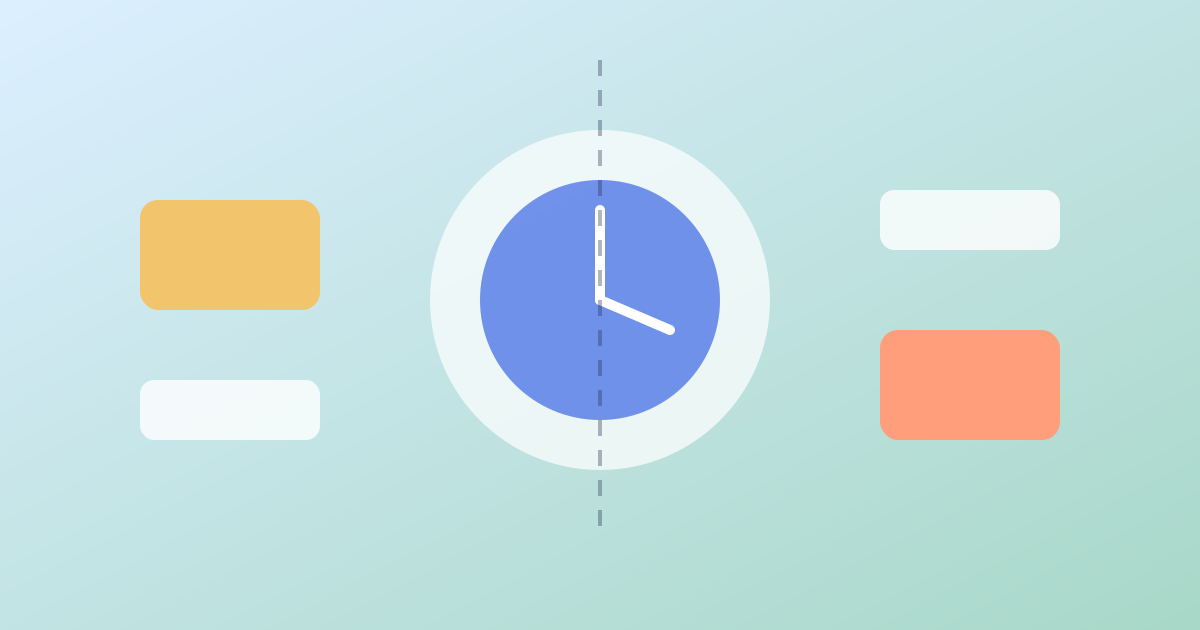
An original illustration for the remote-work boundary: home on one side, work on the other, and a clear line between them.
Why Remote Work Blurs the Line
Remote work removes many natural boundaries. There is no train home, no office door closing, and no change of place to signal that work is done. A laptop left open on a table can quietly invite one more message, one more task, and one more hour.
That blur affects mood in subtle ways. You may feel tired without knowing why, restless in the evening, or guilty for resting during the day. Without a record, those feelings are easy to dismiss as a bad week. With a record, you can see whether the pattern repeats after long video-call days, after skipped breaks, or after evenings when work never quite closed.
Mood journaling helps because it separates feeling from output. A day can be productive and still feel draining. A slower day can still feel calm and satisfying. When you track mood separately from tasks, you stop judging every day by what you finished, and you start noticing what actually sustains you.
If you are new to daily notes, the beginner guide to mood journaling explains the one-sentence starting point. This article adapts that idea for remote work, with three short check-ins instead of one long entry.
How a Mood Journal for Remote Workers Actually Works
The method is simple: three tiny check-ins a day, each under two minutes. Morning, midday, and shutdown. Each check-in asks the same small questions, so the answers can be compared across days.
In the morning, write one mood word for how you start the day, and one word for what you hope the day will feel like. In the middle of the day, write one mood word again, plus one sentence about what has helped or hindered so far. At shutdown, write one mood word for how you end the day, one thing you finished or let go of, and one line that closes work.
That is the whole system. Nine small pieces across a day, none of them long. You can keep them in a notebook, in a private digital journal, or in a simple note on your phone. The tool matters far less than the return: morning, midday, and shutdown, most days, in your own words.
Keeping the entries private matters too. If you write as if a manager might read them, you will soften the truth. This journal is for you, not for performance review. It records feelings, not achievements, and it should never be shared as proof of work.
The Morning Check-In: Start Before the First Message
Remote mornings often begin with messages, not with a pause. A short check-in before you open your inbox can change the shape of the day. It takes less than two minutes, and it gives you a starting point to compare with later.
Write the date, one mood word, and one hope word. For example: Monday, steady, spacious. Or: Tuesday, groggy, focused. Then add one sentence about what would help today, such as a walk before lunch, fewer back-to-back calls, or a clear finish time.
This is not a plan for the whole day. It is a gentle intention. If the day goes differently, that difference itself is useful information. A morning hope of calm, followed by a midday note of overload, tells you something about meeting load or task switching that a to-do list alone would not show.
Try to anchor the morning check-in to something you already do, like making coffee or opening the curtains. Anchoring it to an existing habit makes it easier to remember, even on busy mornings. If mornings are rushed, write the check-in while your computer starts up. Two minutes is enough.
For a light starting prompt, you can also try the mood quiz. Use it as a reflection aid, not as a verdict. Your own morning word remains the most honest starting point, because it comes from you, in the moment, before the day has shaped it.
The Midday Check-In: Notice Before You Drift
Midday is where remote days often drift. Lunch becomes a sandwich at the keyboard. Breaks disappear. The afternoon stretches ahead without a pause. A short midday check-in interrupts that drift without adding a long task.
At lunch, or just after it, write one mood word and one sentence. What helped this morning? What drained you? A sentence like “Two long calls left me flat, but a short walk helped” is complete. You do not need to explain the calls or solve the schedule yet. Noticing is enough for now.
This check-in also helps you protect the second half of the day. If you notice that you feel flat, you might choose a real break, a change of room, or a simpler next task. If you notice that you feel energised after focused work, you might protect a similar block tomorrow. Small midday notes turn vague tiredness into specific, usable clues.
If you work from a small space, a physical cue can help here too. Stand up, move to a different chair for lunch, or step outside for five minutes. The journal entry and the movement work together: one records the feeling, the other changes the setting. Together, they make the middle of the day feel like a real break, not just a pause between messages.
Daily journal prompts can help when the midday sentence feels hard to start. The collection of daily journal prompts includes short, practical questions you can borrow, such as what restored a little energy today, or what would make the afternoon feel lighter.
The Shutdown Ritual: Close Work on Purpose
Shutdown is the most important check-in for remote workers, because it replaces the missing commute. Without a deliberate close, work can follow you into dinner, into rest, and into sleep. A short shutdown entry draws the line on purpose.
At your chosen finish time, write three things. First, one mood word for how the day ends. Second, one thing you finished, paused, or deliberately left for tomorrow. Third, one closing line, such as “Work is done for today.” That line may sound simple, but it is powerful. It tells your mind that the workday has a real end, even when the laptop stays in the same room.
After the entry, close the laptop, move it if you can, or cover it with a cloth. A small physical action reinforces the written close. If you share a home, this ritual also signals to others that you are now available for home life, not still half at work.
Some days, shutdown will feel messy. You may leave tasks unfinished, or feel uneasy about tomorrow. Write that honestly, then still write the closing line. The ritual does not require a perfect day. It only requires a clear end. Over weeks, a consistent shutdown makes evenings feel more like evenings, and mornings feel less like a continuation of yesterday.
A mid-article illustration for the three check-ins: morning, midday, and shutdown, each with its own small space in the day.
A Template You Can Copy
Here is a template for one remote-work day. Copy it exactly for a week, then adjust only what feels too long or too vague.
Morning: mood word, hope word, one sentence about what would help. Midday: mood word, one sentence about what helped or drained you. Shutdown: mood word, one thing finished or left, one closing line.
An example day might read like this. Morning: steady, spacious. A walk before lunch would help. Midday: flat. Back-to-back calls drained me, but water and fresh air helped. Shutdown: tired but relieved. Finished the report draft, left emails for tomorrow. Work is done for today.
Notice how short that is. It takes only a few minutes in total, yet it holds a clear story: a hopeful start, a draining middle, and a deliberate close. After a month, stories like this reveal patterns that memory alone misses.
You can also add a colour word if you like. For example: morning grey, midday blue, evening amber. Colours can capture a feeling faster than adjectives on busy days. The colour palette tool can help you explore which shades feel calm, heavy, or hopeful to you, and art journaling with colour can turn a workday mood into a small visual note without any drawing skill.
If you prefer a visual record, you can turn a mood word into an image with the mood art generator. A picture of a flat afternoon or a relieved evening can make a pattern easier to recognise later, especially when words feel slow after a long screen day.
Common Mistakes Remote Workers Make With Mood Journals
The first mistake is tracking productivity instead of mood. Writing “finished five tasks, felt bad” is useful only if you also name the feeling. Try “finished five tasks, felt drained and restless” instead. Mood is the point of this journal. Output already has its own tools and lists elsewhere.
The second mistake is writing only at shutdown, and trying to reconstruct the whole day from memory. By evening, morning feelings are often forgotten or reshaped. Three short check-ins beat one long evening summary, because they capture the day while it is happening.
The third mistake is making the journal a place for work complaints only. Complaints are honest, and they belong on the page, but a journal that holds only frustration becomes hard to open. Balance it with one small note of what helped each day, even if it is only fresh air, a kind message, or a task completed. That balance keeps the habit welcoming.
The fourth mistake is skipping breaks and then blaming the journal for not helping. A journal records patterns, but it cannot create rest on its own. If your notes repeatedly show flat afternoons after skipped lunches, the next step is a real lunch break, not a longer entry. Let the record point to one small change, then test that change for a week.
The fifth mistake is judging a low mood as a failed workday. A low mood is information, not a verdict. Some days are heavy because of workload, poor sleep, or difficult news, not because of effort. Naming the mood without judging it makes it easier to respond kindly, whether that response is a break, a shorter task list, or an earlier shutdown.
The Weekly Review: Finding Your Own Patterns
Once a week, spend ten minutes reading your check-ins. Choose a calm moment, perhaps Friday shutdown or Sunday evening. Do not try to fix everything. Just notice.
Ask four questions. Which mornings started best, and what came before them? Which middays felt heaviest, and what filled them? Which shutdowns felt cleanest, and what closing action helped? Is there one small change to try next week, such as a protected lunch, fewer consecutive calls, or a firmer finish time?
Write the answers in four short lines. That is your weekly review. It turns fifteen small check-ins into one clear picture, without turning reflection into homework. If you want more background on reading patterns, the guide to building a mood habit explains how small, consistent routines survive busy weeks.
You can also use the review to adjust your workspace, not just your schedule. If notes show that evenings improve when the laptop is moved away, make that move a daily habit. If notes show that mornings improve after a walk, protect that walk as firmly as a meeting. The journal works best when its clues lead to one concrete change at a time.
For inspiration, browsing the gallery or reading other articles on the blog can offer gentle ideas, but your own weekly review should stay the main source. Other people’s routines are suggestions, not standards. Your patterns, in your home and your job, are what matter.
Boundaries Beyond the Page
A mood journal supports boundaries, but it cannot create them alone. A few practical boundaries make the journal more effective, because they give the recorded patterns somewhere to go.
First, choose a finish time and protect it most days. A finish time that moves every day is not a boundary. It is a hope. If work regularly overflows, note that pattern honestly, and consider what one conversation or schedule change might help.
Second, create a small physical separation, even in a small home. A different chair for work and rest, a laptop cover at shutdown, or a short walk around the block can all signal a change of mode. The separation does not need to be large to be real.
Third, protect at least one real break in the middle of the day. A break taken away from screens, even for fifteen minutes, often shows up in midday notes as a lift in mood. If breaks keep disappearing, that is a pattern worth noticing, not a personal failure.
Fourth, keep work messages out of rest spaces where possible. A phone that buzzes with work messages all evening makes shutdown harder, however good the journal entry was. A simple rule, such as no work messages after dinner, can make the closing line feel true.
These boundaries are not rules for everyone. They are experiments to test, one at a time, with your journal as the record of what actually helped. If a boundary helps, keep it. If it does not, try another. The journal keeps the experiment honest.
A Simple Weekly Routine for Remote Workers
Here is a weekly routine you can follow without adding much time. On Monday morning, write your first check-in and one hope word for the week, such as steadier or more spacious. Each day, write the three short check-ins. On Friday at shutdown, spend ten minutes on the weekly review.
During the review, choose one focus for next week. One focus only. It might be earlier shutdowns, real lunches, or fewer back-to-back calls. Write it at the top of next week’s first page, so you see it each morning. At the end of that week, check whether the focus helped, and choose the next one.
This routine fits remote work because it is small, repeatable, and tied to the workday itself. It does not ask for an hour of reflection, a new app, or a perfect streak. It asks for a few minutes at three natural moments, and a short review once a week.
If you miss a check-in, do not try to reconstruct it later. Just write the next one. A journal that survives missed check-ins is a journal that lasts through busy projects, sick days, and holidays. Consistency over weeks matters far more than perfection on any single day.
You can find all the supporting tools together on the tools page, including prompts, the quiz, and the palette tool. Use them when they help, and ignore them when a plain notebook feels better. The routine is yours, and it should fit your work, your home, and your energy.
Frequently Asked Questions
How much time does this routine take? About five minutes a day in total, plus ten minutes for the weekly review. Each check-in is under two minutes, and short entries are the design, not a shortcut.
Should I journal on weekends too? Only if it helps. Many remote workers journal on workdays only, and use weekends for rest. If weekend entries help you notice recovery, add a single evening line. If they feel like work, skip them.
What if my mood is the same every day? That is still useful information. A steady pattern may mean a stable routine, or it may mean you need more specific words. Try adding a colour, an energy number, or a second word, such as tired but calm, to capture small differences.
What if work feels overwhelming for a long time? Keep the journal short, protect breaks and shutdown where you can, and consider talking to a manager, a trusted colleague, or a professional about workload and support. A journal can reveal a pattern, but it is not a substitute for workplace support or professional help.
Can I use this journal alongside a task list? Yes. Keep them separate. The task list tracks what you did. The mood journal tracks how it felt. Together, they give a fuller picture than either one alone.

A closing illustration for the end of the remote workday: the house returns to being home, and work rests until tomorrow.
A Gentle Closing
A mood journal for remote workers is not about working harder or feeling positive all day. It is about seeing the line between home and work more clearly, one short check-in at a time. Morning, midday, and shutdown. A few honest words, a closing line, and a small weekly review.
Start tomorrow, if you like. Write one morning word before the first message, one midday sentence at lunch, and one closing line at shutdown. Then close the laptop, and let home be home again.
This article is general information for creative reflection only. It is not medical advice, and it is not a substitute for professional help. If you are struggling with your mental health, please consider reaching out to a qualified professional or a trusted support service in your area.