A mood vision board journal is a gentler way to practise mood journaling. Instead of starting with a blank page and a demand to explain yourself, you start with pictures, words, and colour.
That small change matters. Some days, feelings arrive as images before they arrive as sentences. A grey morning, a warm afternoon, a restless evening — you can sense the colour of the day before you can name it in words.
This kind of journal keeps mood tracking visual. You collect what feels true, arrange it on a page, and add only as many words as you need. Over time, the pages become a record you can actually enjoy looking back on.

An original abstract illustration for a mood vision board journal: bright panels, a warm circle, and a winding path through the week.
What is a mood vision board journal?
A mood vision board journal combines two simple habits. The first is a vision board: a collection of images, colours, and short phrases that capture a feeling, a hope, or a theme. The second is a journal: a dated record of how you actually felt.
Put together, they give you a page that is both expressive and honest. You are not only collecting pretty pictures. You are also noticing what your days really looked like.
For example, a page for a calm week might hold soft blues, a photo of a quiet street, and the words “slow morning, clear head”. A page for a busy week might hold sharper shapes, brighter reds, and the words “much to do, little rest”.
Neither page is better than the other. Both are information. The board helps you see the week at a glance, while the words stop the pictures from becoming vague decoration.
If you already keep a written journal, this approach does not replace it. It gives that journal a visual front door. You can start on the journal page here when you want words only, and use a vision board page when you want images first.
Why pictures help mood journaling
Words are powerful, but they are not always the first language of feeling. Many people know they feel “off” long before they know why. A picture can hold that in-between state without forcing an explanation.
Colour works in a similar way. You might not want to write a paragraph about a low-energy day, but you can choose a muted blue and know exactly what it means to you. Later, when you look back, that blue will remind you of the day more quickly than a generic label like “bad”.
Pictures also lower the pressure to perform. A blank lined page can feel like a test. A board with a few cut-outs, doodles, or digital shapes feels like play. That matters, because a habit you enjoy is a habit you return to.
This is also why visual tools can help beginners. If you are new to mood journaling, try making a small piece of mood art on the create page first, then write two or three sentences about what you made. The art gives the words somewhere to start.
There is no need for artistic skill. A vision board journal is not judged on beauty. It is judged, if at all, on honesty: does this page look like your week felt?
How a mood vision board journal differs from a normal vision board
A normal vision board usually looks forward. It collects goals, dreams, and images of a future you want. That can be inspiring, but it can also drift away from real life.
A mood vision board journal looks both ways. It records the present, and it gently shapes the near future. You might notice that restful colours keep appearing after walks, and then choose to protect walk time next week. The insight comes from your own pages, not from a generic goal.
It also stays small. A traditional board can grow into a large poster that is hard to update. A journal board is one page, or one screen, at a time. One day, one week, or one theme is enough.
That size limit is a feature. When a page is small, you must choose. Choosing forces you to notice what mattered most, rather than collecting everything that caught your eye.
If you like working with colour palettes, the colour palette tool can help you pick a small set of colours for a page before you start. Limiting yourself to three or four colours often makes a board feel calmer and easier to read later.
Starting your first mood vision board journal page
Start with one week, not one month. A week is long enough to show a pattern and short enough to finish without losing interest.
First, pick a theme or a question for the week. It could be as simple as “How did rest feel this week?” or “What gave me energy?” A question keeps the board focused, so it does not become a random collage.
Second, gather material. On paper, this can be magazine cuttings, printed photos, fabric scraps, coloured pens, or stickers. Digitally, it can be shapes, gradients, photos you already own, or simple drawings. Use what you already have. Buying new supplies is not required, and it can become a reason to delay starting.
Third, choose your colours before you choose your pictures. Pick one colour for calm, one for energy, one for tension, and one for joy, or use whatever set feels true to you. Write the meaning of each colour at the edge of the page, so future you can read it back without guessing.
Fourth, place the pictures loosely. Do not glue or finalise anything until the arrangement feels roughly right. Leave white space. White space is not wasted space; it gives your eyes somewhere to rest, and it gives the page room to breathe.
Finally, add words last. A short caption, a mood word, or a single sentence per day is enough. The words should explain the pictures, not repeat a long diary entry beside them.
A simple weekly layout that works
You do not need a complicated template. A layout with four zones works well for most people, and it fits on one page or one screen.
The top zone is the week and the theme. Write the dates and one question, such as “What helped me feel steady?” That question becomes the lens for the whole page.
The middle zone is the collage itself. This is where pictures, colours, and shapes live. Let the size of each element show its importance. A large calm shape for a restful day, and a small sharp shape for a brief stressful moment, tells a story without words.
The side zone is a tiny mood key. List each colour, each symbol, and what it meant that week. Keep this key short. If you need more than six entries, the board may be trying to say too much at once.
The bottom zone is a short reflection. Three lines are enough: what stood out, what surprised you, and one small thing you want to carry into next week. This reflection is where mood tracking turns into learning.
If you want prompts for that bottom section, the journal prompts collection offers short starters by theme. A prompt like “What moment do I want to remember from this week?” often works better than an open question like “How was my week?”
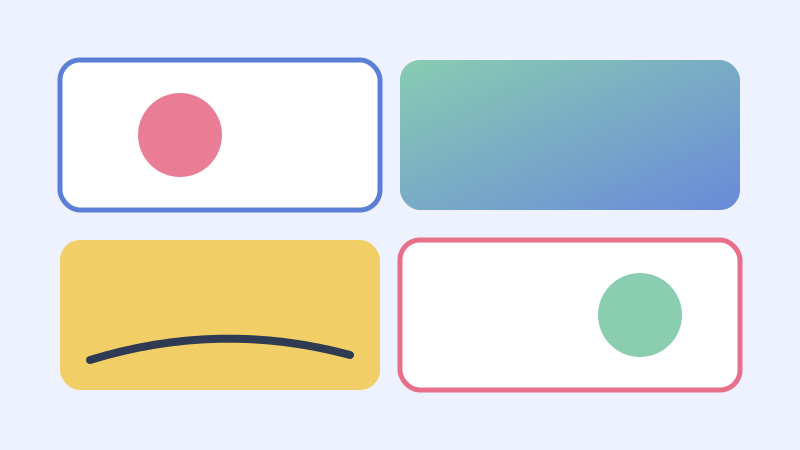
An original illustration for a weekly layout: four zones for theme, collage, colour key, and reflection.
Choosing pictures without overthinking them
Many people stall at this step. They worry about finding the “right” image, and the board never gets made. A useful rule is to choose quickly and trust the first response.
Set a timer for ten minutes. Collect five to eight images or shapes. Then stop. If an image keeps drawing your eye, it probably belongs, even if you cannot explain why yet. Explanation can come later, in the caption.
It helps to mix types of images. A landscape can stand for a mood of openness. A texture, like rough paper or soft fabric, can stand for tension or comfort. A single word, cut out or handwritten, can anchor a whole corner of the board.
Avoid filling every gap. A board that is crowded with images can feel noisy, and noise makes it harder to see the mood underneath. Choose fewer images, and give each one space.
You can also reuse images across weeks. If the same calm blue shape appears again and again, that repetition is data. It tells you something about what calm looks like for you, and you can notice it precisely because the image stayed the same.
The gallery here is a good place to browse for visual ideas, and to see how other mood artworks use simple shapes and gradients to suggest feeling without spelling everything out.
Adding words that help, not words that hide
Words on a vision board journal should be short, specific, and honest. Long paragraphs can push the pictures aside and turn the page back into a normal diary. Short words keep the balance.
Try mood words with a little more detail than “good” or “bad”. “Light after a walk”, “tense before a call”, and “quietly pleased” all say more, and they are still short enough to sit beside a picture.
Try also writing what happened, not only how you felt. “Slept badly, slow morning” explains a grey panel. “Finished a task, easy evening” explains a warm one. The pairing of event and feeling is what makes a page useful when you look back a month later.
Be careful with judgement words. “Lazy”, “useless”, and “always stressed” are conclusions, not observations. They close down reflection. A plainer version, such as “low energy, stayed indoors”, leaves room for curiosity about what might help next time.
If a day feels too private for words, a symbol can stand in. A dot, a wave, a spiral, or a single letter can mark the day without exposing details you do not want to record. The journal is yours, and privacy is part of what makes honesty possible.
Common mistakes in a mood vision board journal
The first common mistake is making the board too beautiful to be honest. If you only keep pages that look polished, you will start hiding difficult weeks. A vision board journal should include grey weeks, messy weeks, and unfinished weeks. Those pages are often the most useful later.
The second mistake is collecting without reflecting. A board with no caption and no weekly note is pleasant to look at, but it teaches you little. Add at least three lines of reflection, even if they are simple. Reflection is what turns a collage into a journal.
The third mistake is copying someone else’s colour meanings. Colour associations are personal and cultural, and they change with experience. Your calm colour might be green, grey, or pale yellow. What matters is that you define it and use it consistently for a while, so patterns can emerge.
The fourth mistake is starting too big. A month-long board, a wall-sized poster, or a daily board with ten images will exhaust most people within a week. Start with one weekly page, with five to eight images, and let the habit prove itself before you expand it.
The fifth mistake is treating a missed week as a failure. Life interrupts journals. If you miss a week, simply start the next page. Do not try to rebuild the missing week from memory, because a reconstructed board is less honest than a fresh one. A journal that survives gaps is a journal that lasts.
Turning pages into patterns with mood tracking
After three or four weekly pages, you have enough material for a useful review. Spread the pages out, physically or as images, and look for repeats.
Which colours appear most often? Which images return? Which words sit beside calm pages, and which sit beside tense ones? You do not need a chart to notice these things. Your eyes will find them.
Write down two or three patterns in plain language. For example: “Walks appear beside calm pages.” Or: “Late nights appear beside flat mornings.” Or: “Conversations appear beside light pages.” These sentences are small, but they point to choices you can actually make.
This is where mood tracking earns its keep. Tracking is not about collecting data for its own sake. It is about making the next week slightly easier to shape, based on evidence from your own life.
If you want a more structured check-in alongside your boards, the mood quiz offers a short reflective prompt set that can complement a weekly review. Use it as a conversation starter with yourself, not as a score or a verdict.
You can also keep a simple written log beside your boards. The private journal tool here stores entries in your own browser, which makes it a handy companion: board for pictures, journal for the few sentences that do not fit on the page.
A weekly routine for a mood vision board journal
A routine does not need to be rigid. It only needs a time, a place, and a small set of steps you can repeat.
On Sunday evening, or whenever your week turns over, spend twenty minutes making the next board. Review the past week in your head, choose colours, place pictures, and add captions. Keep it to twenty minutes, so it does not become a chore.
During the week, jot mood words in a note or in your journal. One word a day is enough. These notes become the raw material for the next board, and they stop you from having to remember a whole week at once.
At the end of the month, spend ten minutes looking at all four boards together. Ask one question: “What do I want more of, and what do I want less of, next month?” Write the answer in one sentence, and let that sentence guide the next month’s first board.
If you miss a Sunday, make the board on Monday. If you miss a whole month, make one board for the current week and move on. The routine is a rhythm, not a rule, and rhythms can pause and restart.
For more ideas on keeping a habit alive through busy weeks, the article on building a mood habit covers small anchors, missed days, and why a low bar often beats a perfect streak.
Frequently asked questions about a mood vision board journal
Do I need to be artistic? No. Simple shapes, colours, and a few words are enough. The board is a record, not an artwork for exhibition, and its value comes from honesty, not technique.
Should a board be paper or digital? Either works. Paper feels tactile and screen-free, while digital boards are easier to store, duplicate, and share privately. Try one paper page and one digital page, then choose the format you actually return to.
How often should I make a board? Weekly works well for most people. Daily boards can feel rushed, and monthly boards can blur important details. Weekly gives you both pattern and detail.
Can I include photos of people? You can, in a private journal, but many people prefer abstract images, landscapes, or objects. Abstract images keep the focus on feeling rather than on specific events, and they are easier to look back on without reopening a difficult memory in full detail.
What if my board looks sad? Then it is honest, and honesty is the point. A sad board is not a failed board. It is a record of a week that was hard, and it may help you notice what support, rest, or change could help in the week ahead.

An original illustration for looking back over a month of boards: small pages, one winding path, and a clearer pattern.
Starting this week, in five small steps
Choose one week and one question. Gather five to eight images or shapes in ten minutes. Pick three or four colours and write what each means. Arrange the board loosely, leave white space, and add short captions last. Write three lines of reflection at the bottom.
That is the whole practice. It fits in an evening, it uses materials you already have, and it gives you a page you can look back on with interest rather than duty.
Over time, those pages add up to something a written diary alone rarely gives: a visual history of your emotional weather, in your own colours and images. You will see seasons in your own life — brighter stretches, quieter stretches, and turning points — and you will see them in a form that words alone might have missed.
If you are curious, start with the create page to make a single mood image today, then build your first board around it this weekend. One image, one page, one week: that is enough to begin.
This article offers general information for creative reflection only. It is not medical advice, and it is not a substitute for professional help. If you are struggling with your mental health, consider speaking with a qualified professional or a trusted support service in your area.