Rainy day mood journaling is a simple way to turn a grey, wet afternoon into a calm creative pause. Instead of waiting for the rain to stop, you sit down for a few minutes, notice how the weather is affecting you, and put that feeling into words and colour. This kind of mood journaling does not need sunshine, a perfect desk, or a long stretch of free time. It only needs a small moment indoors and an honest sentence or two.
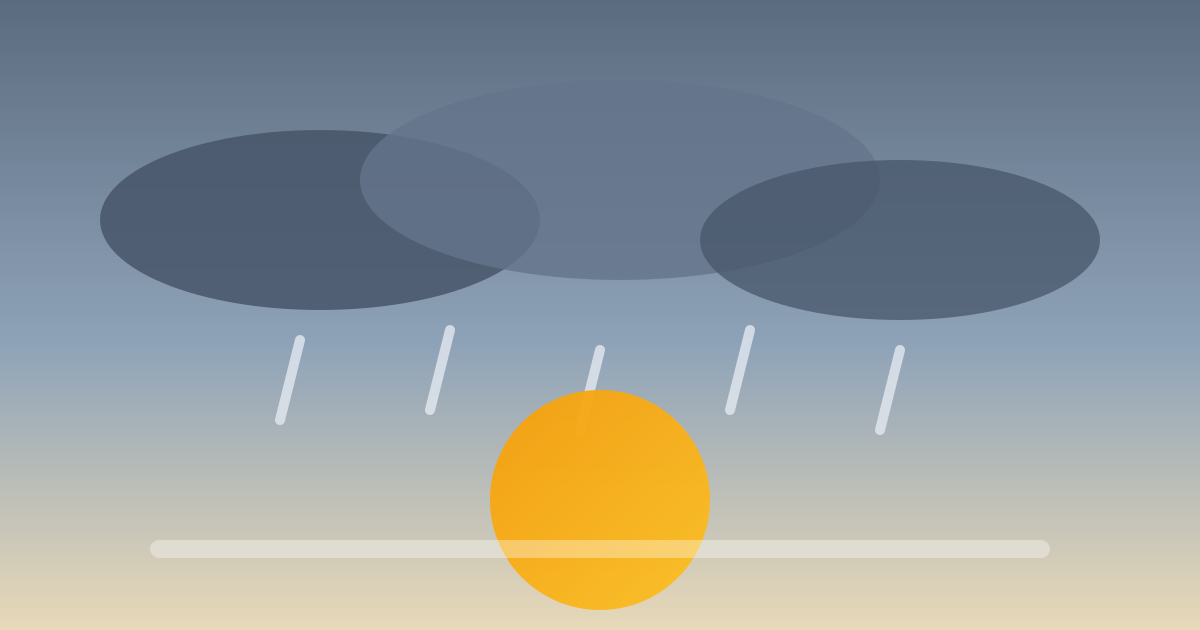
A quiet, original illustration for rainy days: grey clouds, soft rain, and a little warmth underneath.
Why Rain Changes How We Feel
Rain changes light, sound, and plans all at once. The sky grows darker, the room feels quieter, and outdoor plans may be cancelled. For some people, that feels cosy and restful. For others, it feels flat, restless, or a little lonely. Neither reaction is wrong. A rainy day simply gives you clearer material to notice, because the change in weather is easy to name.
That is why rainy days are good journaling days. You already have a starting point: the weather outside. You can compare it with the weather inside you. Are they the same, or different? You might feel calm while the rain is heavy, or you might feel low even though you love the sound of rain. Writing that contrast down helps you see that mood is not just caused by weather. It is shaped by sleep, plans, company, and what you did earlier in the day.
If you already keep a private journal, a rainy entry fits easily into your normal routine. You do not need a special rainy-day notebook. Just add a short note about the rain, the light, and the sound, and then write how you feel beside it. Over time, those small weather notes make your entries easier to read back, because you can picture the day again.
How Rainy Day Mood Journaling Works
Rainy day mood journaling works in three small steps: notice, name, and colour. First, notice one thing about the rain. Is it light drizzle, steady rain, or a heavy storm? Second, name your mood in one or two plain words, such as calm, flat, restless, or content. Third, choose a colour that matches that mood, or simply describe the colour you imagine. That is the whole practice.
You can do this on paper, or you can use the private journal tool here, where entries stay in your own browser. You can also turn a rainy entry into art later with the free mood art generator, which lets you turn a feeling into an image without needing drawing skill. The journal entry comes first. The art is a bonus, not a requirement.
Keep the entry short on purpose. Five minutes is plenty. Rainy-day journaling is not about writing a long essay about the weather. It is about catching a small, true moment before the day moves on. If you write more because you enjoy it, that is fine. If you only write three lines, that is also fine.
A Simple Five-Minute Rainy-Day Routine
Start by making a warm drink or sitting near a window. You do not need a perfect view. Even a small patch of grey sky is enough. Take one slow breath, and listen to the rain for a few seconds. This tiny pause helps you shift from rushing to noticing.
Next, write the date and one line about the rain. For example: “Steady rain, grey light, quiet street.” Then write one mood word and one sentence about why. For example: “Calm. The rain gave me permission to slow down.” Or: “Restless. I had planned a walk and now I feel stuck indoors.”
Then, if you like colour, add one colour note. You might write “soft blue-grey” for a calm day, or “warm amber” for a cosy day. The colour palette tool can help you explore combinations, and you can read more about how colour and feeling connect in Colour Psychology and Mood. Colour is a shortcut, not a test. There is no right colour for rain.
Finish with one small intention for the rest of the day. It could be “read for twenty minutes,” “call a friend,” or “rest without guilt.” A small intention turns a journal entry into a gentle plan, without turning it into a to-do list.
Prompts for Grey Days
Prompts help on days when your mind feels blank. Try one prompt at a time, and stop when you have written something honest. You do not need to answer them all.
One useful prompt is: “The rain today makes me feel ___ because ___.” Fill in the blanks quickly, without overthinking. Another is: “If today had a colour, it would be ___.” A third is: “One thing I can enjoy indoors today is ___.” These prompts are short, and they work well alongside the daily journal prompts, which offer more starting points by theme.
You can also try a senses prompt. What can you hear, see, and smell right now? Rain on a window, grey light on a wall, and the smell of tea or coffee are all small details. Writing two or three sense details makes an entry feel real when you read it back later. It also slows you down, which is often the point on a rainy day.
Another gentle prompt is to compare today with yesterday. Was yesterday sunnier, busier, or louder? How does today feel different? Comparison is not about deciding which day was better. It is about noticing change. Small changes, noticed often, are what make mood tracking useful over weeks and months.
Using Colour When the Sky Is Grey
Grey skies do not mean grey entries. In fact, grey weather can make colour feel more vivid. A warm lamp, a bright mug, a colourful blanket, or a bold pen can stand out against a dull day. Noticing those small pops of colour is a useful journaling habit.
Try describing the colours around you, not just the colours you feel. For example: “Grey window, warm yellow lamp, green plant.” That list is simple, but it trains your eye to find warmth on a dull day. If you enjoy making art from feelings, the gallery shows how other mood artworks use colour and shape, and it can spark ideas without copying anyone else’s style.
You can also play with contrast in your entry. Write about a grey feeling and a warm colour together, such as “flat mood, amber light.” That contrast is honest. Many rainy days hold both feelings at once: low energy and quiet comfort, boredom and relief, loneliness and calm. Colour helps you hold two feelings at the same time, without forcing one simple label.
If you want a little more structure, try a three-colour entry. Choose one colour for the weather, one for your mood, and one for what you hope the evening will feel like. For example: grey-blue, soft green, warm gold. You do not need to explain the colours in detail. Just writing them down is enough to make the entry visual and memorable.

A calm, original illustration for choosing colours on a grey day: a rainy window beside warm and cool colour dots.
Turning a Rainy Entry Into Art
Some people like to turn a journal entry into a picture. This is optional, but it can be a pleasant rainy-day activity. Start from your words, not from a perfect image in your head. Pick one phrase from your entry, such as “quiet rain, warm light,” and use it as the starting idea for art.
The mood art generator is built for this step. You can describe a mood and a colour, and create an abstract image to keep with your entry. You do not need to be good at drawing. Abstract shapes, gradients, and soft colours work well for rainy moods, because they suggest feeling without needing to look like anything real.
You can also make art by hand, with pencils, pens, or paint. Try a simple exercise: draw a grey rectangle for the sky, then add one warm shape for how you feel. A small amber circle, a soft green wave, or a gold line can change the whole picture. This is the same spirit as Art Journaling for Beginners, where simple shapes matter more than skill. Keep the art quick and playful. If it starts to feel like work, stop and return to words.
Saving a rainy-day artwork beside your entry can also help later. When you look back in a sunnier month, the grey and gold image will bring the rainy afternoon back clearly. That memory is part of what makes journaling rewarding: not just the words, but the feeling of a day you took time to notice.
Examples: Three Rainy-Day Entries
Short examples can make a new habit feel easier. Here are three invented entries, each only a few lines long. Use them as models, not as rules to copy word for word.
Entry one, calm: “Steady rain, soft grey light. Mood: calm. I feel unhurried for the first time this week. Colour: pale blue and warm cream. Intention: read slowly, no rushing.” This entry is quiet, and it shows how rain can feel like permission to rest.
Entry two, restless: “Heavy rain, cancelled walk. Mood: restless and a little flat. I wanted fresh air and now I feel stuck. Colour: dark grey with a small orange spark. Intention: stretch, open a window, listen to music.” This entry names frustration honestly, then adds a small, doable step.
Entry three, cosy: “Light drizzle, tea, blanket. Mood: content. The house feels warm while the street is wet. Colour: amber and soft green. Intention: write a letter to a friend.” This entry shows how a rainy day can feel warm and social, even indoors.
Notice what these entries share. They are short. They name the weather, the mood, a colour, and a small intention. They do not try to be poetic or profound. They are useful because they are true and specific, and because you could write one in five minutes on a real rainy day.
Common Mistakes on Rainy Days
One common mistake is writing only about the weather and forgetting your mood. “It rained all day” is a weather report, not a journal entry. Add one sentence about how you felt, even if it is simple. “It rained all day, and I felt calm” is already a journal entry.
Another mistake is judging the mood. Writing “I should not feel low on a rainy day” adds pressure to an already grey day. Try a neutral version instead: “I feel low today, and the rain matches that feeling.” Neutral language makes it easier to keep journaling, because you are describing a day, not grading yourself.
A third mistake is making the routine too long. If you set a rule that rainy-day journaling must take thirty minutes, include art, and answer ten prompts, you will skip it on busy days. Keep the rule small: one mood word, one sentence, one colour if you like. You can always write more, but the small version is the one that survives a tired evening.
A fourth mistake is comparing your rainy day with someone else’s sunny post online. Other people’s bright photos do not mean your quiet indoor day is wasted. A rainy day spent resting, reading, or writing is still a real day, and it still deserves a short, honest entry. Your journal is private, and it does not need to look impressive.
Rainy Days and Mood Tracking Over Time
One rainy entry is a pleasant pause. Several rainy entries, spread over weeks, become a useful record. You may notice that light drizzle feels different from heavy storms, or that rainy mornings feel different from rainy evenings. You may notice that some rainy days feel restful, while others feel lonely, depending on sleep, company, or plans.
That kind of simple observation is the heart of mood tracking. It is not about finding a grand rule, such as “rain always makes me sad.” It is about noticing smaller, more useful details, such as “rainy days feel better when I have a warm drink and a plan for the evening.” Those details can help you plan the next rainy day a little better.
If you want to review your entries later, the ideas in Understanding Mood Patterns can help you look back gently, without over-interpreting a single low day. A rainy dip is often just a rainy dip. It becomes interesting only when the same note appears several times, and even then, it is simply information, not a verdict.
You can also use the mood quiz on a rainy day as a light check-in, if you enjoy that kind of prompt. It is not a test, and it does not replace your own words. It can simply offer a different starting point when you are not sure what to write. Pair it with one journal sentence, and you have a complete rainy-day check-in in a few minutes.
When Rain Feels Heavy, Not Cosy
Not every rainy day feels cosy. Sometimes rain matches a heavy mood, and writing about it can feel uncomfortable. In that case, keep the entry even shorter and kinder. Write one sentence, then stop. You do not need to solve the feeling in the entry.
It can help to add a small comfort note, such as “Today I will be gentle with myself,” or “I will eat a warm meal and rest early.” Comfort notes are not treatments. They are simply small, kind plans for a difficult day. If low mood lasts for a long time, or feels overwhelming, consider talking to someone you trust or a professional for support. Journaling is a creative habit, not a replacement for care.
It also helps to separate the weather from the rest of the day. Ask: “If the sun were out, would I still feel this way?” Sometimes the answer is yes, and the rain is only background. Sometimes the answer is no, and the grey light really is part of it. Either answer is useful, because it stops you from blaming everything on the weather, or ignoring the weather completely.
On heavy days, avoid long, looping entries that repeat the same worry many times. Write the worry once, clearly, then write one small next step, even if it is only “drink water, open curtains, step outside briefly when rain eases.” A short entry with a small step is kinder than a long entry that leaves you feeling stuck.
A Rainy-Day Toolkit: Small Things That Help
A tiny toolkit makes rainy-day journaling easier to start. You do not need to buy anything special. A pen you like, a notebook or your phone, and a warm drink are enough. If you journal digitally, keep the journal page easy to open, so you do not lose the moment while searching for it.
Light matters on grey days. A warm lamp, a candle if safe, or sitting near the brightest window can make writing feel more pleasant. Sound matters too. Some people like rain sounds with no music, while others like quiet instrumental music. Try both, and notice which helps you write more honestly.
Keep prompts nearby for blank days. A short list on a card, or the daily journal prompts page, can save you from staring at an empty page. You can also keep a small colour list: five colours you often use, with one word beside each. For example, blue for calm, amber for cosy, grey for flat, green for hopeful, and soft pink for gentle. A tiny colour list speeds up entries without limiting them.
Finally, keep rainy entries together in a simple way. If you use paper, mark rainy days with a small cloud symbol in the margin. If you use the digital journal, add the word “rain” to the entry. That small mark makes it easy to find rainy days later, when you want to compare them or make art from them.
Frequently Asked Questions
Do I need to journal every rainy day? No. Journal on the rainy days when you feel like it, or when you have five minutes. A few honest rainy entries are more useful than a forced entry every time it rains. The habit should feel like a pause, not a chore.
What if I do not like rain at all? That is useful information too. Write that honestly: “I dislike rainy days because I miss walking outside.” Then add what helps: a short indoor walk, stretching, cooking, or a call with a friend. Journaling does not need to make you love rain. It only needs to help you notice what you need on rainy days.
Can children or beginners try this? Yes, with simple language. A child or beginner can write one mood word, draw one rain cloud, and colour one warm shape. Keep it playful and short. For more beginner ideas, Mood Journaling for Beginners explains how to start with just one sentence a day.
Does colour choice mean something fixed? No. Colour meanings in journaling are personal, not fixed rules. Blue may feel calm to one person and cold to another. Use colours that feel true to you on that day, and do not worry about what a colour is “supposed” to mean. Your own associations are the ones that matter.

A cosy, original illustration for ending a rainy day well: warm light indoors while rain falls outside.
Try It Today, Even If It Is Not Raining
You do not need to wait for rain to try this practice. Imagine a grey day, or remember the last rainy afternoon, and write a short entry from memory. What did the light look like? How did you feel? What colour would you choose now? That remembered entry still counts as practice, and it prepares you for the next real rainy day.
When rain does come, you will already know the steps: notice the rain, name your mood, add a colour if you like, and finish with one small intention. That routine takes five minutes, fits on a phone or a small page, and turns a grey day into a moment you actually noticed.
Browse the blog for more gentle journaling ideas, or visit the tools page to try a quiz, a colour palette, or a set of prompts. Rainy days will keep coming. With a tiny journaling habit, they can become some of your calmest, most creative days of the year.
Disclaimer: This article offers general information for creative reflection only. It is not medical advice, diagnosis, or treatment, and it is not a substitute for professional help. If you are struggling, please consider speaking with a trusted person or a qualified professional.