Tracking energy, not just mood, changes what a journal can tell you. A day can feel pleasant and still leave you exhausted. Another day can feel tense and still leave you full of drive. If you only record mood, those two days look like opposites. If you record energy as well, you can see why they felt so different, and what each day actually needed.
Mood answers one question: how did this day feel? Energy answers another: how much did I have to give, and what kind of energy was it? Together, they give a fuller picture than either line alone. This article shows how to add that second line, how to read the two lines together, and how to avoid the mistakes that make energy tracking feel like another chore.
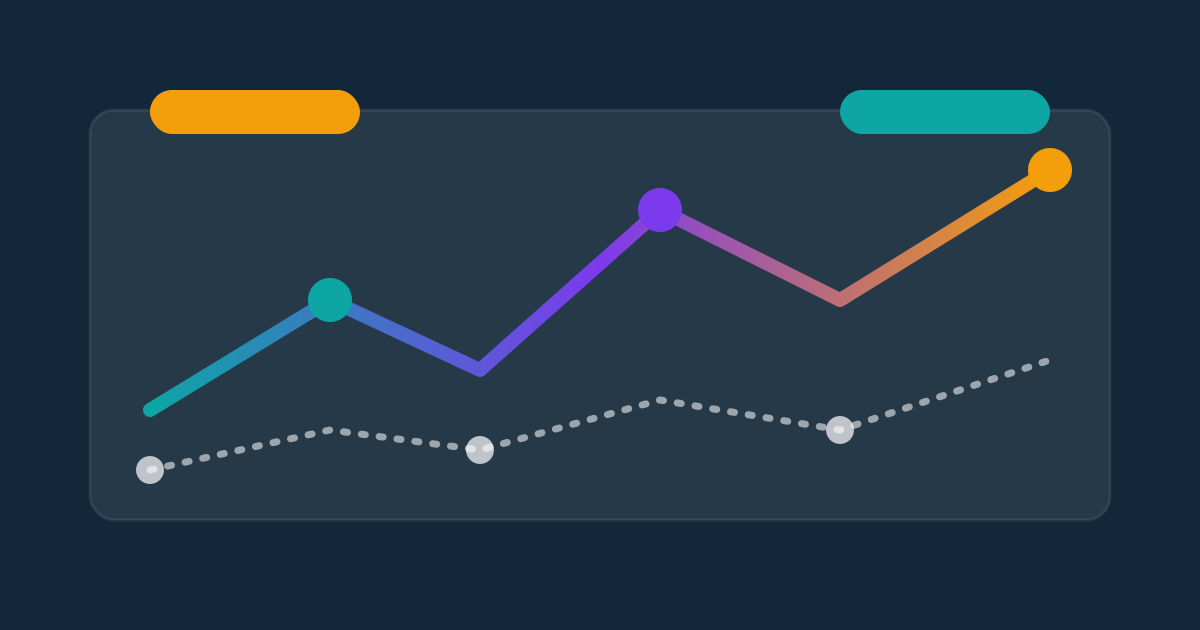
An original abstract cover for two lines in one journal: energy and mood do not always move together.
Tracking Energy, Not Just Mood: The Two-Line Entry
A two-line entry is deliberately small. On one line, write your mood in a word or two. On the second line, write your energy, also in a word or two, or as a simple number from one to ten. Add one short sentence about what shaped either line, if you have time. That is the whole entry.
For example, an entry might read: mood, content; energy, 3 out of 10; note, enjoyed a quiet lunch, but slept badly. Another might read: mood, anxious; energy, 8 out of 10; note, nervous before a presentation, but alert and ready. Neither entry is better than the other. They simply describe different combinations, and different combinations call for different responses.
The private journal on this site works well for this format, because entries stay in your own browser and do not need to be tidy. You can also use paper, a notes app, or any tool you already open daily. The format matters more than the tool. Two lines, written honestly, beat a long entry written only on good days.
Why Mood Alone Can Mislead You
Mood is a summary, and summaries hide useful detail. “Good day” can mean rested and cheerful, or it can mean relieved that a hard day is over. “Bad day” can mean sad, or it can mean tired, overstimulated, or bored. When you read those summaries back a month later, you often cannot tell which version you meant.
Energy adds the missing detail. Low energy with a good mood often points to rest, not to a problem to solve. High energy with a low mood often points to a need to direct that energy somewhere small and useful, rather than sitting with restless thoughts. Without the second line, both situations can be misread as simply good or bad, and the response can miss the mark.
This is also why mood tracking on its own can feel frustrating. You track for weeks, you see ups and downs, but you cannot see what to change. Adding energy often reveals the lever. Perhaps your mood is steady, but your energy crashes every afternoon. Perhaps your energy is high in the morning, but your mood dips when the day has no structure. Those are different patterns, and they suggest different small changes.
If you are starting from scratch, the guide in Mood Journaling for Beginners explains the one-sentence habit that keeps a journal going. The energy line fits neatly into that habit. You are not starting a second journal. You are adding one word or number to the entry you already write.
Four Kinds of Energy Worth Noticing
Energy is not a single tank that simply fills and empties. It helps to notice which kind of energy is high or low, at least in a general way. You do not need a scientific label for each kind. A plain description is enough.
Physical energy is about the body: rested or tired, alert or foggy, steady or drained after movement or a long day indoors. Mental energy is about focus: clear and able to concentrate, or scattered and easily distracted. Social energy is about people: warmed by conversation, or worn out by too much interaction. Creative energy is about making: full of ideas and eager to start, or blank and uninterested even in a favourite hobby.
Most days involve a mix. You might have high physical energy but low social energy, and prefer a walk alone to a busy gathering. You might have low physical energy but high creative energy, and prefer gentle sketching to a demanding task. Naming the kind, even roughly, makes the entry more useful than a single number alone.
A simple way to keep this manageable is to add the kind only when it stands out. If your whole day felt low, write “energy, low” and move on. If only social energy felt low, write “energy, low socially, fine otherwise”. That extra word, written only when it matters, keeps the entry short while still capturing the detail that explains the day.
Colour can also help here, if words feel slow. The colour palette tool lets you explore colours linked to different moods and states, and some people find that a warm or cool colour captures energy faster than a number. There is no rule that you must use it. It is one more shorthand, for days when language feels like work.
A Worked Example: One Week, Two Lines
Imagine a week of two-line entries, written each evening in under two minutes. Monday reads: mood, steady; energy, 6; note, good sleep, ordinary workday. Tuesday reads: mood, pleased; energy, 4; note, lovely evening with friends, but tired by nine. Wednesday reads: mood, flat; energy, 7; note, rested, but the day had no clear task.
Thursday reads: mood, tense; energy, 8; note, deadline pressure, but focused and fast. Friday reads: mood, relieved; energy, 3; note, deadline done, body tired. Saturday reads: mood, light; energy, 6; note, walk and slow morning helped. Sunday reads: mood, calm; energy, 5; note, quiet day, ready for the week but not buzzing.
Read as mood alone, the week looks uneven: steady, pleased, flat, tense, relieved, light, calm. Read with energy, a clearer story appears. Social evenings lift mood but cost energy. Unstructured days leave energy unused, which can feel flat even when the body is rested. Deadline pressure raises both tension and focus, and relief afterwards brings a real energy dip that needs rest, not a new task.
That story would be hard to see from mood words alone, because “pleased” on Tuesday and “light” on Saturday sound similar. Their energy lines are different, and that difference explains why Tuesday needed an early night while Saturday felt balanced. This is the practical value of the second line: it turns a vague week into a week you can learn from.

An original abstract illustration for energy as a changing level, not a fixed trait.
Reading Four Combinations Without Overthinking Them
Once you have a week or two of two-line entries, four combinations will start to appear. You do not need to sort every day neatly into a box. It helps, though, to recognise the broad pattern, because each pattern suggests a different kind of next step.
High mood with high energy is the combination most people hope for. It is a good time for harder tasks, new ideas, or social plans you actually want. The useful question here is not how to stay in this state forever, because no one does. It is what helped create it, so you can notice those conditions again.
High mood with low energy is a quieter combination. You feel content, but you do not have much to give. This is a good time for gentle, enjoyable things: a walk, a favourite show, a low-pressure creative task, or simply rest. Trying to push through low energy on a good-mood day can spoil the mood without achieving much.
Low mood with high energy is restless. You have drive, but it has nowhere comfortable to go. A small, physical, or practical task can help: tidying one room, walking, drafting a short plan, or working on a task with a clear end. The goal is not to force happiness. It is to give the energy a useful direction.
Low mood with low energy is the combination that most needs kindness and simplicity. This is not a day for big decisions, major tasks, or harsh self-judgement. A basic routine, a small comfort, fresh air if possible, and an early night are often enough. If this combination appears often, or for a long stretch, that is information worth taking seriously, and worth discussing with a professional rather than trying to journal your way through alone.
These combinations are descriptions, not diagnoses. They do not explain why you feel a certain way, and they do not replace professional support. They simply give you clearer language for choosing a next step that fits the day you actually had.
Common Mistakes in Energy Tracking
The first mistake is turning energy into a grade. A score of three is not a failure, and a score of nine is not a prize. Energy naturally rises and falls, and the number is only useful as a comparison across your own days. Compare today with your own yesterday, not with someone else’s idea of a productive day.
The second mistake is tracking too many kinds of energy every day. Four kinds are useful as a vocabulary, not as a daily checklist. If you try to score physical, mental, social, and creative energy every evening, the entry becomes a form, and forms get abandoned. Score the whole day simply, and name a kind only when it clearly stands out.
The third mistake is expecting the two lines to match. They often will not, and that mismatch is the point. If you keep “correcting” your energy score to fit your mood, you lose the very information the second line was meant to provide. Let them disagree. The disagreement is where the insight lives.
The fourth mistake is changing everything at once after one pattern appears. If you notice low afternoon energy for three days, try one small change, such as a short walk or an earlier lunch, and watch for a week. Changing sleep, food, work, and exercise all at once makes it impossible to tell what helped, and it makes the journal feel like a project rather than a record.
The fifth mistake is only tracking on extreme days. A journal that only records very good or very bad days gives a dramatic picture, not an honest one. Ordinary days, with middling mood and middling energy, are the background against which patterns become visible. The mood quiz can be a light starting point on an ordinary day, if you want a prompt to notice how you feel before you write, but the daily two lines themselves are the record that matters over time.
A Short Weekly Routine
A weekly routine for energy tracking can stay very light. Each evening, or each morning for the day before, write the two lines and one short note. That takes about two minutes. Do not try to analyse the entry on the same day. Analysis works better with a little distance.
Once a week, read the seven entries together. Ask three questions, and only three. When was energy highest, and what was happening then? When was energy lowest, and what was happening then? Did mood and energy move together this week, or did they split apart, and on which days?
Write one sentence answering the most interesting of those three questions. That sentence is your weekly note. It might say that social evenings lift mood but cost energy, or that unstructured mornings leave energy unused, or that good sleep steadied both lines. One sentence is enough, because it gives you one small experiment for the next week, not a whole programme to follow.
Over a month, those weekly sentences become a pattern of their own. This longer view is explored in Understanding Mood Patterns, which shows how small, repeated notes can reveal rhythms that a single day never could. You do not need to read that article to start. You only need the two lines, and a weekly moment to look back at them.
You can also turn a weekly pattern into something visual, if that helps you remember it. The create tool on this site can turn a mood into an image, and the gallery shows how other people have done the same. A single image for a week, based on its dominant energy, can be a gentle summary, especially if you are a visual thinker. It is optional, and it should never replace the written lines.
Questions People Often Ask
Do I need a number, a word, or both? Either works, as long as you stay consistent enough to compare days. A number makes comparison easy. A word makes the entry feel more human. Many people use both: a number for the level, and a word for the kind, such as “energy, 4, socially tired”. Choose the version you will actually write on a busy evening.
What if my energy changes a lot during the day? Then write the general shape, not every hour. “High morning, low afternoon” is a useful entry. “Steady until lunch, then a dip” is also useful. You are looking for the shape of the day, not a minute-by-minute chart. If one part of the day stands out, name it. If the day was fairly even, a single score is fine.
Should I track energy in the morning or the evening? Evening entries capture the whole day, while morning entries capture how you start it. Either can work, but do not switch constantly, or comparison becomes harder. Try evenings for two weeks, and mornings for two weeks if evenings keep slipping, then keep the time that gives you more honest entries. The daily journal prompts can help at either time, by giving you one focused question when your mind feels blank.
What if I miss several days? Just restart with today. Do not try to reconstruct a week from memory, because reconstructed entries tend to smooth out exactly the ups and downs you wanted to record. A journal that survives gaps is a journal that lasts, and a gap itself is information: it often follows a busy, tiring, or unstructured stretch.
How does energy tracking relate to creative work? Creative work often needs a different kind of energy from routine work, and it can be drained by things that look restful, such as too much scrolling, or lifted by things that look unproductive, such as a walk. The companion article on a mood journal for creatives explores that side in more detail, including notes between projects, when energy and ideas often shift together.

An original abstract illustration for the overlap between mood and energy: they meet, but they are not the same thing.
Starting With Just Tomorrow
You do not need a new notebook, a new app, or a perfect system to try this. Tomorrow evening, write two lines. One for mood, one for energy. Add a short note if you can. Then do the same the next day. After a week, read the lines together and ask the three weekly questions.
Tracking energy, not just mood, will not make every day good, and it will not explain everything about how you feel. What it can do is smaller and more useful: it can stop you from mistaking a tired day for a bad life, a restless day for a lack of purpose, or a content but drained day for a problem to fix. With two lines instead of one, your journal becomes a clearer, kinder record of the days you actually lived.
Browse the full set of tools and the blog when you want more prompts, colour ideas, or longer reflections to support the habit. Start, though, with the two lines. They are enough to begin, and they stay enough even as the habit grows.
This article offers general information for creative reflection only. It is not medical advice, and it is not a substitute for professional help. If you are struggling with your wellbeing, consider speaking with a qualified professional or a trusted support service in your area.